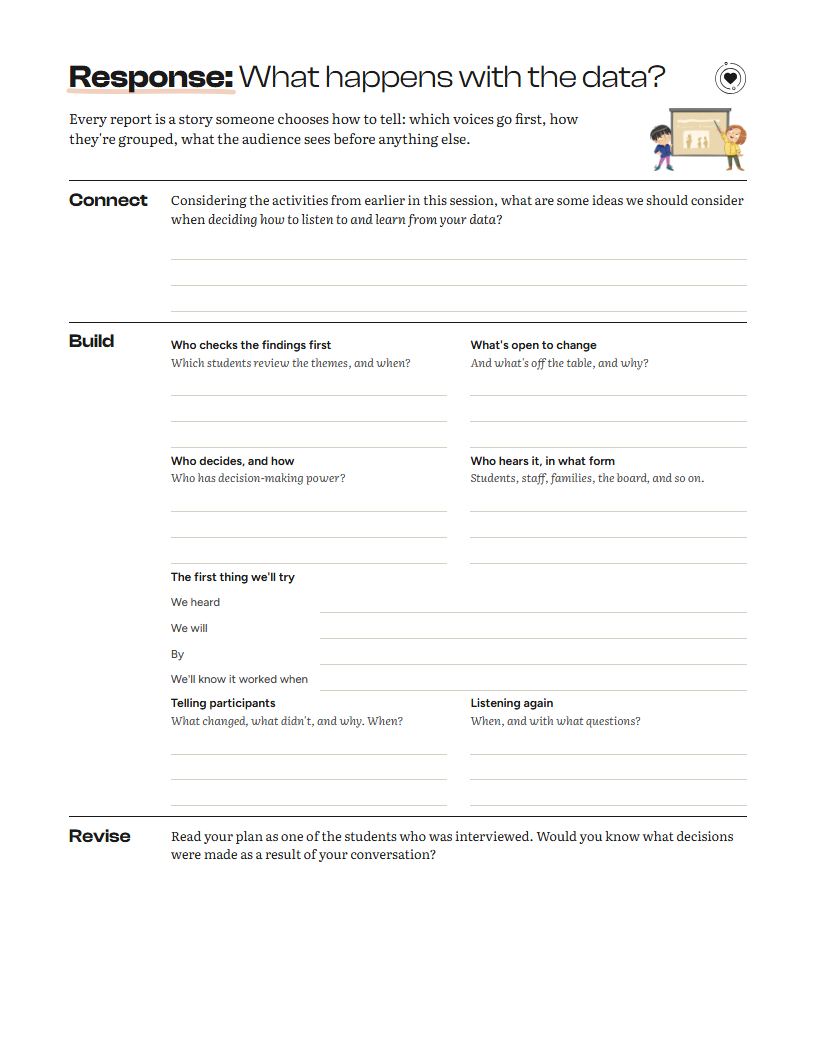
Each handout opens with a worksheet your team fills in together: connect it to what you already know, build your plan, then revise it. The pages after that are examples and resources to draw on. They print on US Letter paper.
-
Part 1 of 5, 2 pages
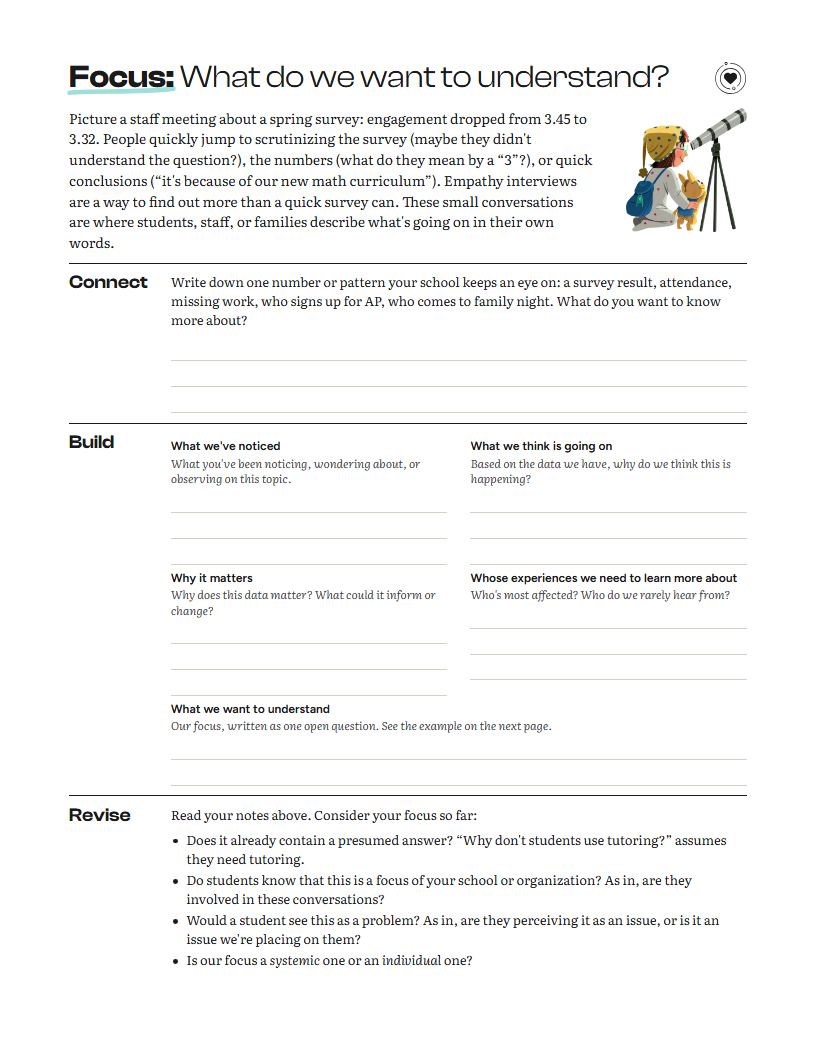
Focus: What do we want to understand?
You'll build a focus for your conversations: what you've noticed, what you think is going on, why it matters, and whose experiences you need to hear.
Also inside: roles students can play, whose experiences tend to get missed, and a worked example.
-
Part 2 of 5, 4 pages
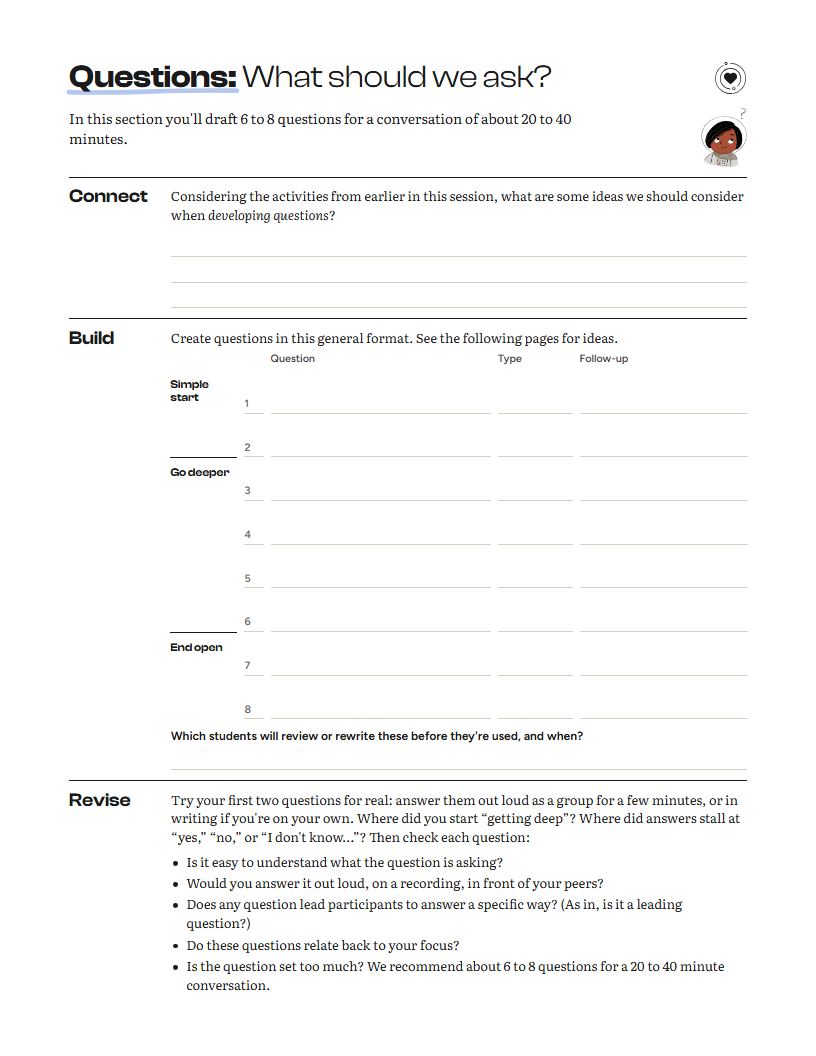
Questions: What should we ask?
You'll build a set of 6 to 8 questions: a simple start, questions that go deeper, and an open ending.
Also inside: question types with an image set, how to improve your questions, writing questions with students, and three question sets used by real schools.
-
Part 3 of 5, 4 pages
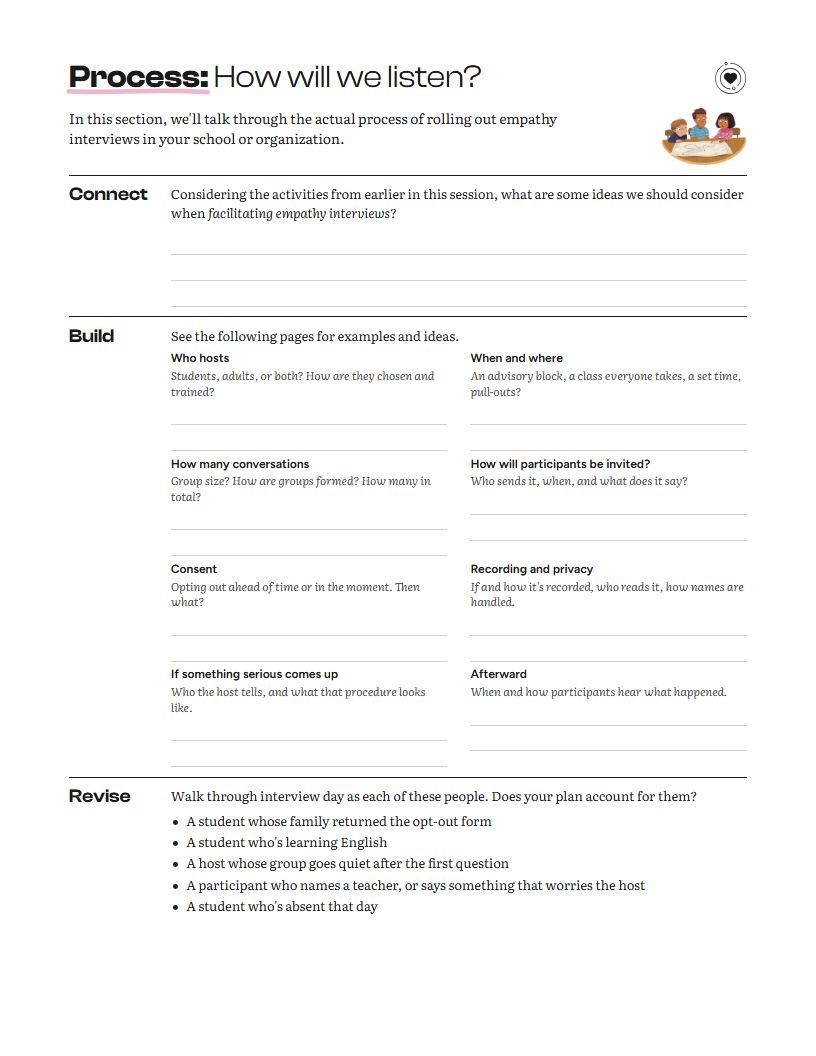
Process: How will we listen?
You'll build a plan for running the conversations: who hosts, when and where, consent, recording, and what happens afterward.
Also inside: a facilitator guide, who does what, fitting conversations into the school day, preparing student hosts, an example family letter, and a timeline.
-
Part 4 of 5, 7 pages
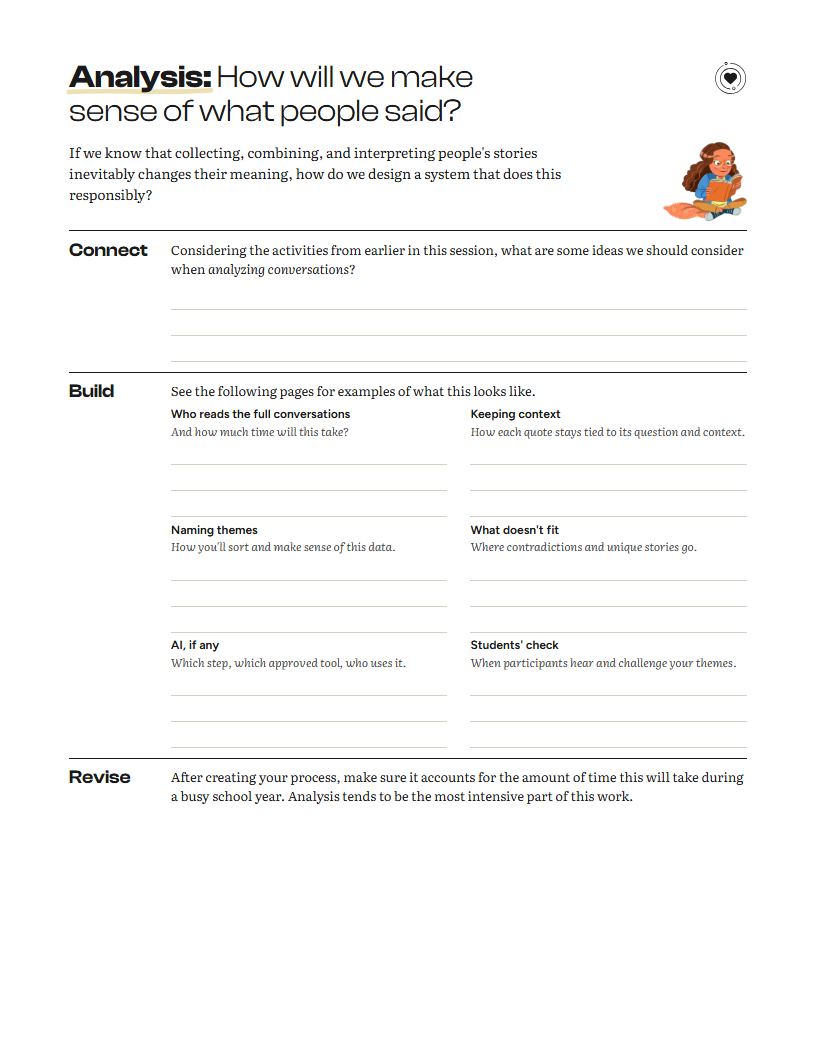
Analysis: How will we make sense of what people said?
You'll build an analysis process: who reads the conversations, how themes get named, where outliers go, and when participants check your work.
Also inside: a worked example, the MIRACLE framework, where AI fits, two prompts that keep people in the loop, and a sheet for checking the results.
-